As an Amazon Associate, we earn from qualifying purchases. Some links may be affiliate links at no extra cost to you. Although our opinions are based on curated research, we haven't used these products. Articles generated with AI.

Understanding Anti Rolling Tank Systems for Yachts

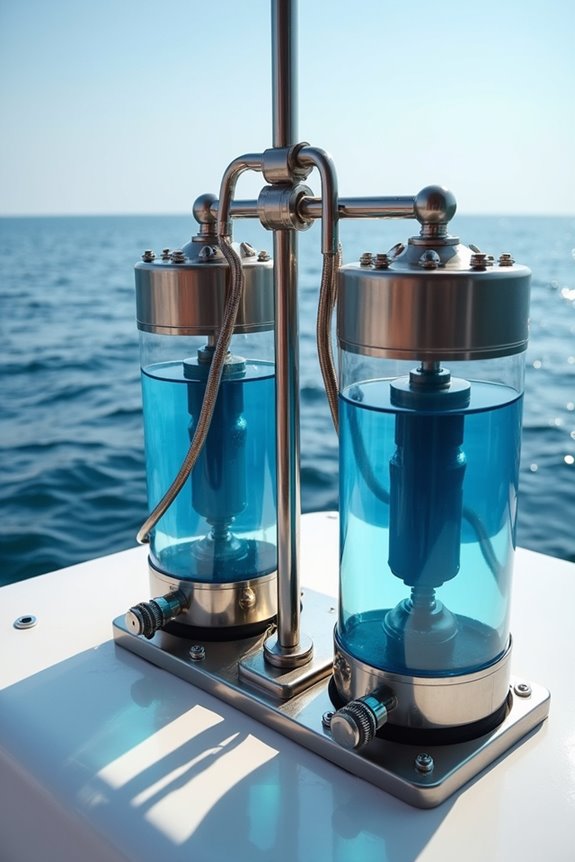
Anti-rolling tank systems help yachts stay steady by using water inside tanks to counteract rolling motions—think of it as the yacht’s natural balancer. There are passive types, which just let water move freely or through U-shaped tubes, and active ones that use pumps and sensors to fight the roll more aggressively. They’re a clever, efficient way to reduce seasickness and improve safety, though they need good design and regular upkeep. Curious about how these systems work on different yachts and what challenges they face?
Key Takeaways
- Anti-rolling tanks reduce yacht roll by using fluid movement inside tanks to create counteracting forces.
- Two main types exist: passive tanks rely on natural fluid dynamics, while active tanks use pumps and sensors.
- Proper tank placement and internal baffles optimize stabilization performance at the yacht’s widest sections.
- These systems enhance onboard comfort, safety, and fuel efficiency by significantly reducing roll motion.
- Maintenance involves regular inspections, tuning system response, and managing fluid to sustain effectiveness.
What Are Anti-Rolling Tank Systems?
You may be interested
Think of anti-rolling tank systems as your yacht’s built-in wave-fighting buddy. These clever devices use principles of fluid dynamics to keep our vessel stable and reduce that annoying side-to-side rolling caused by waves. Inside the tank, water moves in sync with the yacht’s motion, but in the opposite direction, creating an opposing force that dampens roll. It’s like having a built-in dance partner matching the waves, helping us maintain balance. This improves not only our comfort onboard but also the safety of everyone—and everything—on deck. Plus, these systems don’t require complex machinery, making them simpler and more cost-effective than some other stabilizers. So, if you’ve ever wondered how yachts stay steady in rough seas, anti-rolling tanks play a key, quiet role in keeping us upright and enjoying the ride.
Different Types of Anti-Rolling Tanks
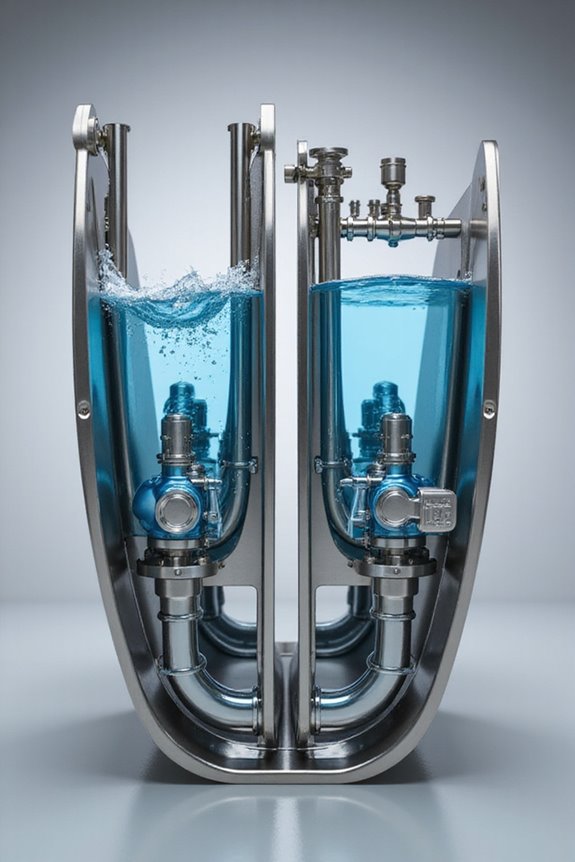
Now that we recognize how anti-rolling tanks work their magic to keep a yacht steady, let’s look at the different types you might come across. There are mainly two: passive and active tanks. Passive tanks, including free surface and U-tube designs, rely on smart use of fluid movement to reduce roll—think of them as the simple, reliable friends who get the job done with minimal fuss and great tank efficiency. Active tanks, on the other hand, use pumps and sensors—real design innovations—to control water flow dynamically, often cutting roll up to 80%. While active systems offer more adaptability in rough seas, they demand more maintenance and a bigger budget. So, whether you prefer straightforward simplicity or tech-savvy sophistication, there’s an anti-rolling tank that fits your yacht and style.
How Anti-Rolling Tanks Work to Stabilize Yachts
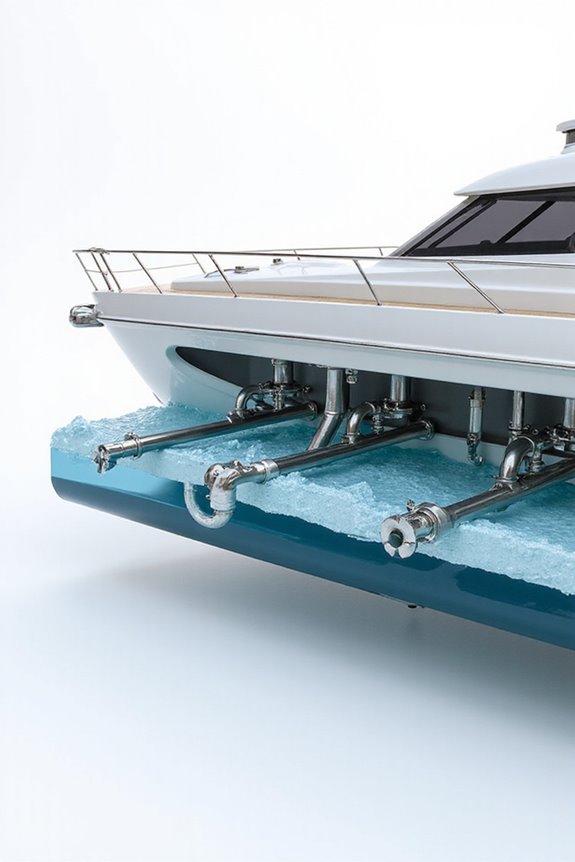
Although the idea of a giant water tank on a yacht might sound like a quirky fashion statement, anti-rolling tanks are actually clever stabilization tools that use the movement of water to counteract the boat’s rolling motion. By harnessing fluid dynamics, these tanks create forces that push against the yacht’s sway. The secret? The water inside swings with a phase difference—about 90 degrees—from the yacht’s roll, acting like a natural counterweight. Placed at the widest parts of the yacht, the tanks’ design and internal baffles maximize this effect. Think of it as a sophisticated dance between fluid and vessel, a smart stabilization mechanism adjusting to sea conditions. It’s this synergy that helps keep us steady, even when the waves insist on a swing party.
Key Benefits of Using Anti-Rolling Tanks
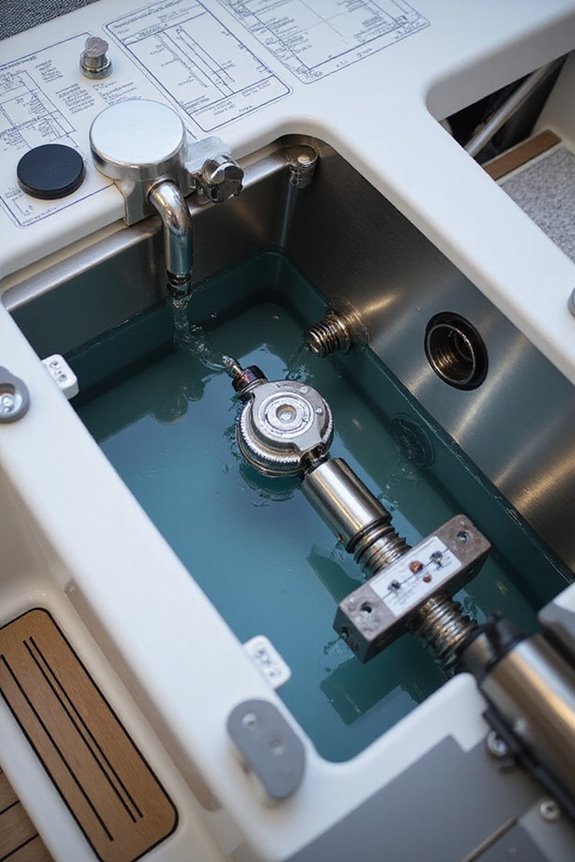
While anti-rolling tanks might sound like just another piece of marine jargon, their benefits are anything but boring—we’re talking serious improvements to how yachts handle rough seas. These systems reduce roll motion considerably, making your journey smoother and more comfortable—goodbye, seasickness! Plus, they improve safety by stabilizing the vessel, which helps during tricky weather. From a technical standpoint, they’re pretty efficient, often using less power than other options and fitting various yacht sizes with relative ease. Now, sure, cost considerations and installation challenges do pop up, but when you weigh those against long-term performance boosts and fuel savings, it’s often a smart trade-off. So, if you’re thinking of enhancing your yacht’s stability, anti-rolling tanks might just be the unsung hero you’re missing.
Limitations and Challenges of Anti-Rolling Tank Systems
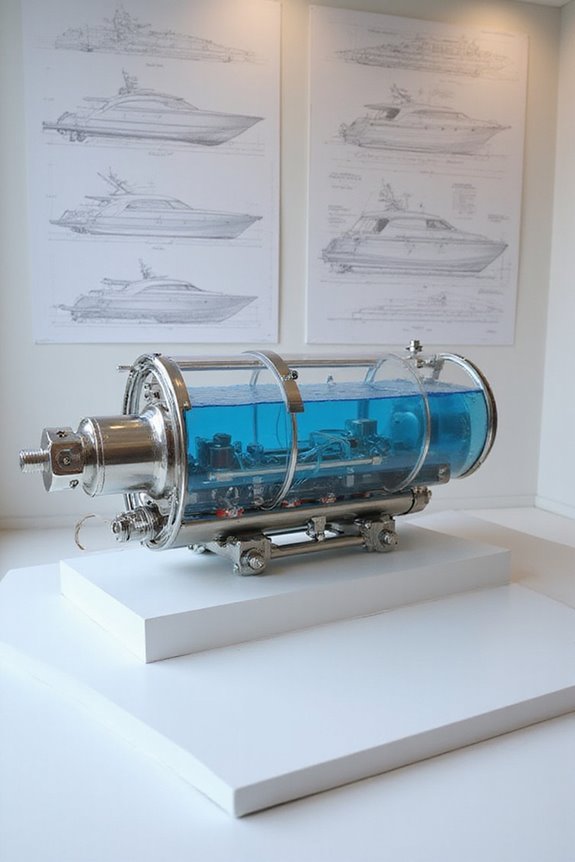
Because anti-rolling tank systems are quite clever, you might expect them to be flawless—but, like any tech, they come with their own quirks and headaches. We face design challenges like finding enough space on smaller yachts and ensuring the structure can handle added weight and stress. Ever wonder why tuning is so important? It’s to match the tank’s response to the yacht’s unique roll pattern, which isn’t always straightforward. Then there are operational constraints—speed affects performance, tank saturation limits effectiveness, and rough seas can throw the system off balance. Plus, the more complex systems need power and maintenance, which means higher costs and potential failures. So, while anti-rolling tanks help us enjoy smoother sails, they definitely aren’t a one-size-fits-all magic fix.
Applications of Anti-Rolling Tanks in Various Yacht Sizes
When it comes to yachts, one size definitely doesn’t fit all—especially with anti-rolling tanks. Whether you’re cruising a cozy 40-footer or commanding a massive superyacht, yacht size flexibility is key. These tanks can be tailored to fit various vessel sizes, ensuring that stabilization effectiveness isn’t compromised by the yacht’s dimensions. Curious how that works? Designers use advanced software to customize tank size and placement, making sure each yacht gets its personal roll-reduction magic. It’s like tailoring a suit, but for stability. Plus, no matter the yacht’s size, these tanks considerably reduce uncomfortable roll motions, especially during choppy weather. So, if you’re looking for smoother sails and enhanced onboard comfort, anti-rolling tanks really do adapt to your boat’s unique needs and make a noticeable difference.
Maintenance Requirements and Common Issues
Although anti-rolling tanks (ART) do a fantastic job smoothing out those pesky yacht rolls, they’re not exactly “set it and forget it” systems. We need to embrace maintenance best practices like regular inspections to check fluid levels and tank integrity. Remember, fluid management and tank drainage are key—leaving parts filled can cause stability headaches. Sensors also need attention, so don’t skip calibrations. Installation challenges can crop up too, with things like weight or center of gravity miscalculations causing trouble down the line. Ever underestimate the importance of proper dump valve placement? It can really affect drainage and performance. By staying on top of these common issues, we keep our ART working smoothly, making every voyage more enjoyable and less rolly. After all, who wants a surprise wet deck?
Historical Development and Future Trends in Anti-Rolling Tanks
Since anti-rolling tanks have been around for well over a century, it’s fascinating to see how much they’ve evolved from simple water-filled compartments to high-tech stabilization systems. Remember those early historical innovations like the free surface tanks from the 1880s and H. Frahm’s U-tube tanks in 1911? Those ideas laid the groundwork we still build on. Fast forward to today, and we’re looking at future advancements like active control systems and lighter materials that promise smarter, more efficient stabilization. Plus, scaling these systems for smaller yachts means more of us can enjoy smoother rides. Who wouldn’t want that? The journey from passive to active systems shows just how far we’ve come—combining old concepts with new tech to keep our yachts steady and our voyages comfortable.
Frequently Asked Questions
How Do Anti-Rolling Tanks Affect Yacht Fuel Efficiency During Operation?
Who knew calming waves could save fuel? With stability improvements, anti-rolling tanks reduce the need for power-hungry stabilizers, lowering fuel consumption. Together, we sail smarter, greener, and with less wallet-drain on our shared adventures.
Can Anti-Rolling Tanks Be Retrofitted Into Older Yacht Designs?
We believe retrofit feasibility hinges on careful design considerations—especially space and stability. Together, we can evaluate your yacht’s layout, ensuring any added tanks enhance comfort without compromising structure. Let’s explore this exciting upgrade option!
What Is the Typical Installation Cost Range for Different Anti-Rolling Tank Systems?
When we consider installation considerations for anti-rolling tanks, cost variations arise from yacht size, system complexity, and location. Typically, installations range around $70,000, but our shared dedication helps navigate these nuances together smoothly.
Are There Environmental Impacts Associated With Using Anti-Rolling Tank Systems?
Remember how a balanced seesaw needs careful tuning? Similarly, anti-rolling tanks impact the environment through energy use and tank maintenance. We’re all steering through evolving environmental regulations to keep our seas safer and cleaner together.
How Do Anti-Rolling Tanks Perform in Extreme Weather Conditions or Storms?
We understand storm performance is vital, and anti-rolling tanks truly shine in extreme conditions. They provide steady roll damping regardless of speed, enhancing safety and comfort while resisting mechanical failure, making us feel secure even during fierce storms.