As an Amazon Associate, we earn from qualifying purchases. Some links may be affiliate links at no extra cost to you. Although our opinions are based on curated research, we haven't used these products. Articles generated with AI.

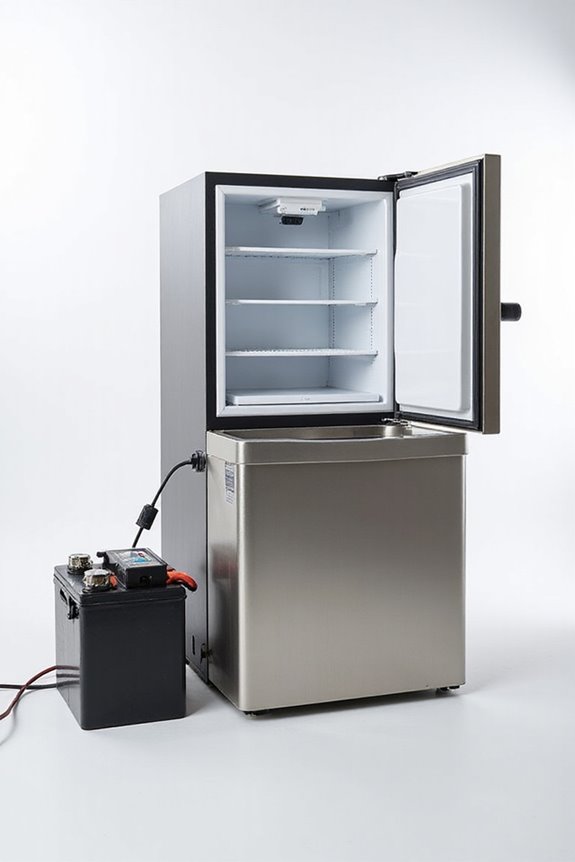
Understanding Refrigerator Energy Usage on Boats

When we use refrigerators on boats, they typically draw 30 to 55 amp-hours daily—more if the compressor has to work overtime due to poor insulation or frequent door openings. Keeping things chilled efficiently means mindful loading, avoiding warm groceries, and sealing the fridge well. Plus, smart energy monitoring or adding solar panels can really save our batteries from going kaput. Curious about how these tricks keep food fresh and power buzzing? Let’s explore that further.
Key Takeaways
- Boat refrigerators typically consume 30 to 55 amp-hours daily depending on compressor efficiency and insulation quality.
- Effective insulation and modern marine compressors significantly reduce energy consumption by minimizing compressor runtime.
- Frequent door openings and warm or overstuffed interiors increase compressor workload and energy use.
- Energy consumption can be monitored using amp-hour meters or battery monitors to manage battery life.
- Alternative power sources like solar panels and wind generators help sustain refrigerator operation off-grid.
Energy Consumption Characteristics of Boat Refrigerators
You may be interested
Although boat refrigerators are smaller than their home counterparts, they still pack a punch when it comes to energy usage, and knowing what to expect can save you some headache (and battery power) down the line. Typically, these 12-volt units consume about 30 to 55 amp-hours daily, thanks to advances in compressor technology that help boost energy efficiency onboard. Ever wondered why some fridges seem to sip power while others guzzle it? It often boils down to how well the compressors and insulation work together to keep things cool without working overtime. Mini fridges designed for marine life show off this efficiency, balancing everyday convenience with smart energy use. So, if you’re aiming to keep food fresh and batteries happy, understanding these consumption habits is a solid first step.
Factors Influencing Power Usage of Refrigerators Aboard
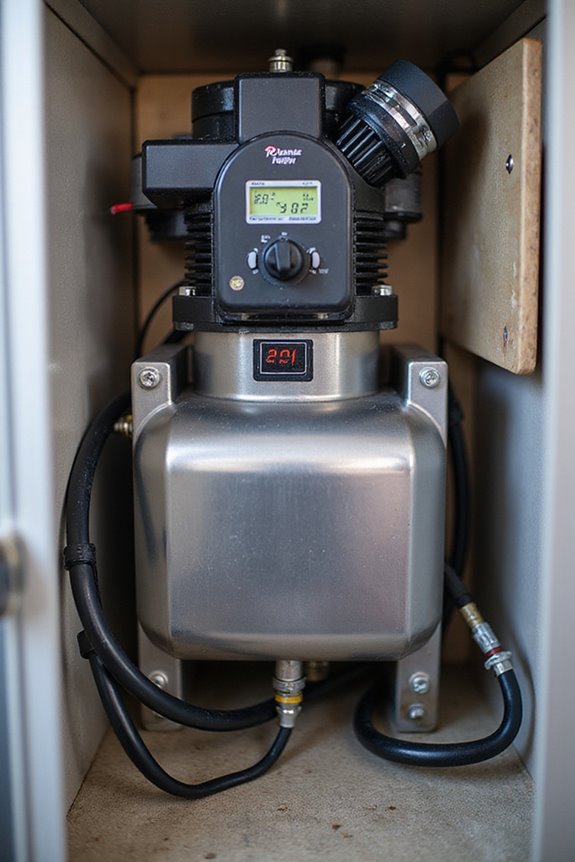
When it comes to keeping our boat refrigerators humming efficiently, several factors quietly team up behind the scenes, affecting how much power they actually use. For starters, insulation effectiveness plays a huge role—thicker, better-quality insulation means the fridge won’t let heat sneak in, so the compressor doesn’t have to slog away as much. Speaking of compressors, their efficiency matters too; modern, marine-rated ones adjust their power use, cooling faster, cycling less often, and sparing our precious battery life. But have you noticed how opening the fridge often makes it work harder? That’s because warm air sneaking in ramps up compressor cycles. So, by minding insulation and harnessing efficient compressors, we give our boats’ refrigerators a better chance at using energy smartly, keeping our onboard snacks cool without draining power.
Techniques for Calculating and Monitoring Energy Consumption
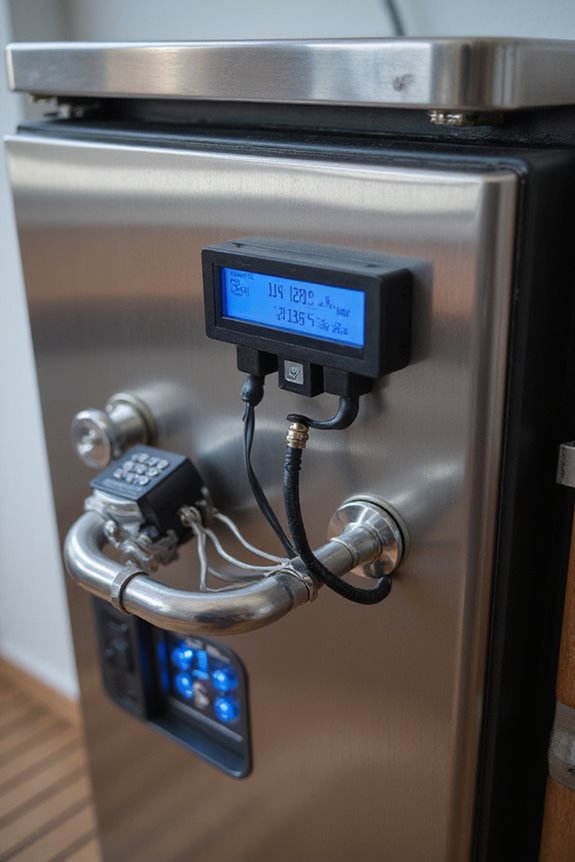
Let’s explore five practical ways we can figure out just how much juice our boat refrigerators are gobbling down. First, conducting an energy audit with inline watt or amp-hour meters gives us real-time power use data. Next, installing battery monitors helps with usage tracking by revealing how much charge our fridge draws and alerts us before batteries hit the danger zone. Then, automated systems can log consumption patterns over days, uncovering odd spikes—or sneaky power drains—that mean it’s time for some preventive maintenance. Don’t forget, calculating total energy in watt-hours (power times hours) lets us plan battery needs smartly. Finally, integrating solar panels paired with consumption tracking can show if we’re matching output with fridge demand, reducing reliance on batteries or noisy generators. Pretty neat, right?
Effects of Loading and Usage Patterns on Efficiency
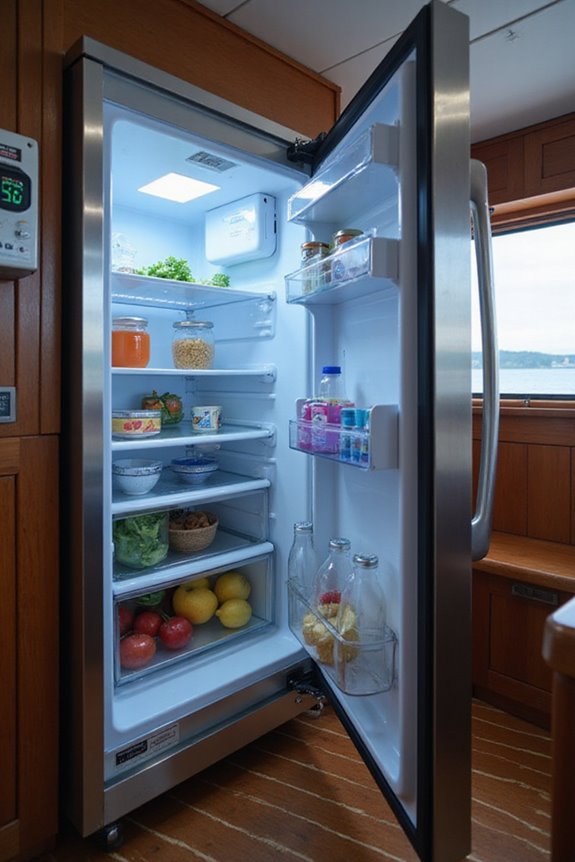
Since our boat refrigerators work harder or easier depending on how we treat them, it’s worth paying attention to loading and usage patterns. Have you noticed how tossing in warm groceries forces the compressor to sweat? That’s why our loading patterns matter—we get better efficiency by adding chilled or frozen items first, which act like thermal buffers. Overstuffing the fridge sounds like a good idea but actually blocks airflow, making the compressor work overtime. Usage strategies like minimizing how often we open the door also help, since warm air sneaking in boosts energy demand. Keeping a steady temperature, rather than drastic swings, saves power and extends fridge life. So, by tuning both what and when we put in, plus mindful door habits, we keep your fridge—and your battery—happy on long trips.
Utilizing Alternative Power Sources for Boat Refrigeration
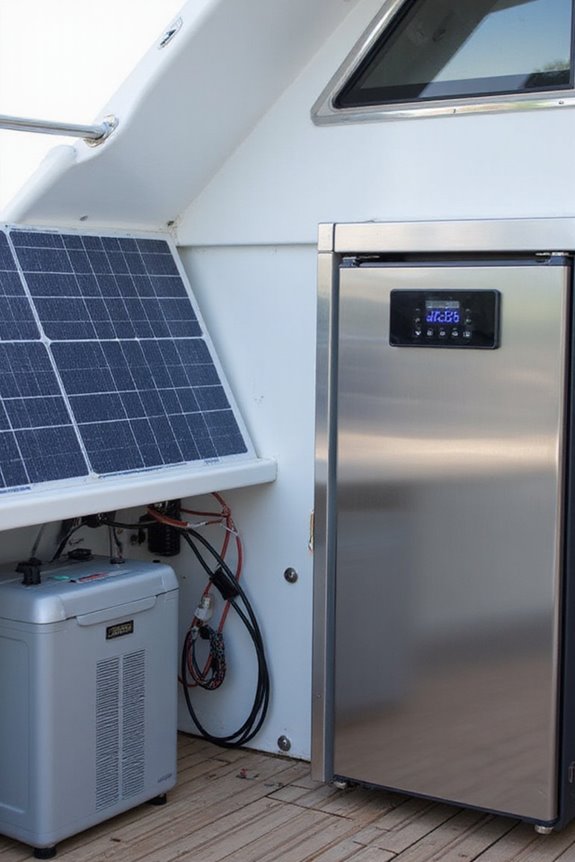
While relying solely on batteries might seem straightforward, tapping into alternative power sources for our boat refrigeration can really extend off-grid adventures and ease the load on our electrical systems. Have we considered solar panel installation? Placing panels where they soak up maximum sunlight lets us charge batteries or run refrigerators directly—quietly and efficiently. But let’s not forget wind generator maintenance: those blades need a bit of tender loving care, or they won’t keep spinning reliably. Wind generators work day and night when the breeze blows, filling in gaps solar can’t cover, especially at night or on cloudy days. Combining solar and wind means we’re not just relying on luck with the weather, which is a smart move for anyone serious about fresh food on the water.
Best Practices to Optimize Refrigerator Energy Consumption
If you want your boat’s refrigerator to sip power rather than guzzle it, optimizing energy consumption is key—and it’s easier than you might think. Let’s start with some straightforward fridge maintenance: keeping condenser coils clean and ensuring door seals are tight prevents energy loss—no one likes a sneaky cold air escape! Next, insulation upgrades make a big difference; adding a few inches of extruded polystyrene or filling gaps with foam keeps the cold in longer, so compressors run less. Ever considered stocking frozen items as “thermal buddies”? They help steady interior temps, reducing compressor strain. Also, steer clear of placing your fridge near heat sources like the engine or direct sun. By embracing these simple best practices, we can all enjoy cooler drinks and extended battery life while out on the water. Who knew saving energy could be so chill?
Frequently Asked Questions
How Does Saltwater Exposure Affect Boat Refrigerator Components and Energy Use?
Saltwater corrosion damages our boat refrigerator components, increasing energy use by making the system work harder. With regular component maintenance, like rinsing and cleaning, we protect our fridges and keep energy costs down together.
Can Vibration From Boat Engines Shorten Refrigerator Lifespan or Increase Power Consumption?
It is understood vibration impact from boat engines can cause engine wear that shortens your refrigerator’s lifespan and increases power consumption. Let’s make sure we secure our units well to protect them and keep energy use manageable.
What Are the Noise Level Expectations for Marine Refrigerators Compared to Household Ones?
When it comes to marine refrigerators, we understand noise reduction and sound insulation are the name of the game—they keep things quieter than household fridges. Living aboard, we all appreciate keeping peace and quiet close to the chest.
Are There Specific Marine Certifications for Refrigerator Energy Efficiency and Safety?
It is understood that marine certifications focus more on safety than specific energy standards, but many marine refrigerators comply with general energy efficiency rules like DOE or AHRI. Together, these guarantee safe, reliable, and efficient cooling aboard our boats.
How Do Different Refrigerant Types Impact Boat Fridge Efficiency and Environmental Compliance?
You might be surprised how refrigerant types dramatically affect energy efficiency in marine fridges. Together, we can choose options balancing cooling power with eco-friendly compliance—ensuring our boats stay efficient and respect the environment we all cherish.